
When your country is only 45 years old, it makes sense many businesses based there are young too. So succession is an issue that plays on the minds of many family business heads in the United Arab Emirates, as they enter the throes of the first generational transition.
That’s where Ziad Salloum and his father Samir come in — both lawyers with expertise ranging from “day-to-day stuff,” as Salloum Jr. puts it (acquisitions, contracts, sales), to managing a business handover from one generation to the next — a process arguably more about personalities than professionalism.
Established in 1980 by Samir, Salloum & Partners LLC (formerly the Law Offices of Samir A. Salloum) assists between 20 and 30 UAE family businesses, including realtors, car dealers, insurance brokers, and shipping companies.
“There are a few, few families that have gone through to the second and third generation, but they tend to be families that very much started abroad,” the younger Salloum says when CampdenFB meets him in the boardroom of the firm’s office in Abu Dhabi.
“Saudi Arabia would be different. But in the United Arab Emirates, the majority of the clients that we are dealing with tend to still be in the transition phase from first to second generation.”
Before entering his father’s firm, Salloum started his career as a banker, meaning when he wanted to come back into the family fold, a good legal grounding was the first matter of business.
“So for 10 years, there was an incredible amount of pressure to get to learn extremely quickly, to acquire the benefit of [my father’s] experience together with the legal expertise.”
Today Salloum holds his business degree along with a Master of Laws from the University of London and a Bachelor’s Degree in Law from the Lebanese University. He is admitted to the Beirut Bar.
“It is a lot to take on board. Obviously it’s something you can never say is complete — you are always learning something, and there is the beauty about being a lawyer; you end up learning so much every day.”
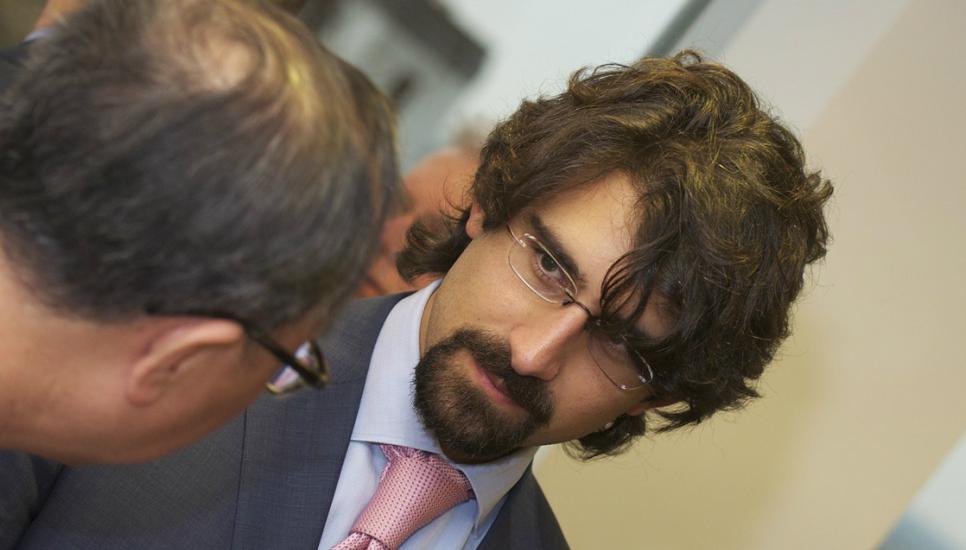
I’m learning from [my father] still every single day. He is wise in a way that you do not tend to find much anymore.
Salloum says even as he was taking over the managerial side and his father mentored him more as a leader, he was still benefitting from his father’s experience.
“By all means, I do not want him out of the business at all. I am learning from him still every single day. He is wise in a way that you do not tend to find much anymore. So his wisdom, his counsel is extremely important.”
Families of wealth worldwide struggle with the big handover, with research showing not enough preparation is being put into handling the often-fraught process.
Among these studies is Campden Wealth and UBS’s Global Family Office Report 2017, which found 45.7% of the 262 family offices surveyed were yet to put a formal succession plan in place, despite having an average $941 million in assets under management.
Emerging market family businesses — under which the UAE was categorized — were actually better prepared than most, with 50.1% reporting they had a formal or informal written plan, compared with 38.6% in North America, 31.4% in Europe, and just 13% in Asia-Pacific.
The stakes are high. In the next 10 years, more than $1 trillion of family businesses will pass to a new generation of owners, according to Badr Jafar, founder of the Pearl Initiative — a not-for-profit Sharjah-based institution focused on improving corporate governance and transparency across the Gulf Cooperation Council.
Nonetheless, Salloum says his clients come to him with a raft of succession issues.
“Part of it is a concern about loss of control... It can also be because [the principal] has sunk their entire life into it and does not have any other interests. So they are worried that if they exit the business, what do they do now?
Salloum says this often leads to procrastination.
“Some then start thinking of an emergency plan of sorts: ‘I started thinking about this later than I should have... So if something were to happen to me today, how do I make sure that at least I have got something in place? A contingency plan that can support them while they get used to and understand the business?’”
Another common spanner in the works with Middle Eastern succession came when children were sent to Western universities, returning with large egos and different cultural norms to their parents.
“If you graduate from one of the best universities in the world and you come back and you step in and you’re like ‘Yeah I know everything!’ So you have got to manage the egos on both sides.”
Because we are a family business ourselves, we understand the concerns they have, because we are going through something very similar.
This is where the unique double-team approach Ziad and Samir can implement comes in handy.
“Because we are a family business ourselves, we understand the concerns they have, because we are going through something very similar.”
“[My father] understands exactly the concerns of the principals and how to bring it across in such a way that they feel they are being addressed, in a manner they could not necessarily accept from me.”
“And I can have a frank discussion with the younger generation who are stepping in, because I was in their shoes.”
Samir handed much of the operational management of the firm over to Ziad in late 2016, but both knew it was important for Samir to stay active in the business.
“He is from that generation where he cannot sit still. With the extra time, he went and got himself appointed as a director of the Continuing Education Centre at the Paris Sorbonne University here in Abu Dhabi.”
“The concern for both of us really was that we wanted to free him up to do the things that he loves to do. So I took the administration off him... But I do not want him out of the business at all.”
Apart from modelling a smooth succession themselves, how does the father-son team begin the planning process with their clients?
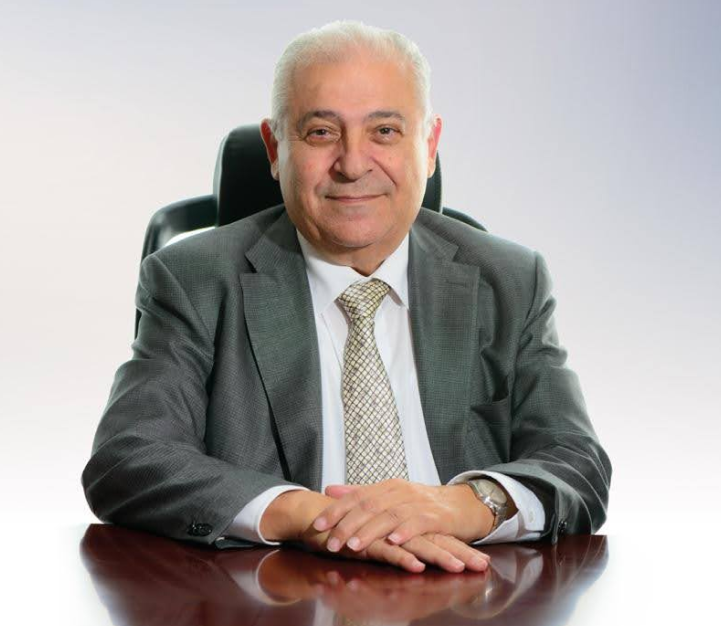
Salloum says it all starts with relationships:
“You can put the most beautiful plans in place, governance plans and all that, but if you do not work first on the strength of the relationship between the family members, then all the rest of it is not really worth the paper it is going to be printed on. So the way my father would put it is ‘You’ve got to start with love.’”
But when blended families become involved, such pure sentiments are often hard to implement.
“We have had one instance where the principal of the family has already handed over a significant chunk of business to one part of the family. Now he is looking at the second part of the business and he needs to hand over to a different part of the family who are more involved in that.”
“It is difficult to say one size fits all… Because of how complicated family relationships can be here [in the UAE] and the sheer number of people involved when you go from generation one to generation two.”
A clean transition from one generation to the next will not always be possible, where there were big age gaps between generations; preparing children has been left too late; or the principal has to step away from the business earlier than expected.
This could be a good time to consider hiring an external professional.
“You can put the most beautiful plans in place, governance plans and all that, but if you don't work first on the strength of the relationship between family members, then all the rest of it is not really worth the paper it is going to be printed on.”
“Yes, it’s a significant additional cost,” Salloum says. “But their role tends to be to pass on the skills to the next generation. That is one approach — the answer depends on the family.”
Salloum says no two successful successions were alike, with some families taking a very structured approach by mapping out rules around the necessary qualifications, work experience, and attributes a family member needs before joining the family business.
Others preferred to bring in children organically over time: families allowed their children to be around business activities from a very young age, to get them used to being around high-powered people.
“From a very young age [the children] are encouraged to come and sit and listen, or to just sit and play, as long as they do not make too much noise... I have seen one instance where a child, five or six years old, has some toys and interrupts the father in the middle of an important negotiation. And he plays with the child, gives him his full attention for 10 or 15 minutes.”
“Then you find as your children are getting older, they play less and listen more. That is extraordinary. You have got them comfortable dealing with people from all walks of life—from the poorest to the richest—and to treat them all with respect.”
Salloum says this is an approach he has started with his own children, with a view to when he potentially hands the firm over to them.
“They come in and sit in the office, so that is one step… if you have already done that part, the rest is reasonably easy. There are specificities of your company that they do not necessarily understand, but you have got that starting place.”
When your country is only 45 years old, it makes sense many businesses based there are young too. So succession is an issue that plays on the minds of many family business heads in the United Arab Emirates, as they enter the throes of the first generational transition.
That’s where Ziad Salloum and his father Samir come in — both lawyers with expertise ranging from “day-to-day stuff,” as Salloum Jr. puts it (acquisitions, contracts, sales), to managing a business handover from one generation to the next — a process arguably more about personalities than professionalism.
Established in 1980 by Samir, Salloum & Partners LLC (formerly the Law Offices of Samir A. Salloum) assists between 20 and 30 UAE family businesses, including realtors, car dealers, insurance brokers, and shipping companies.
“There are a few, few families that have gone through to the second and third generation, but they tend to be families that very much started abroad,” the younger Salloum says when CampdenFB meets him in the boardroom of the firm’s office in Abu Dhabi.
“Saudi Arabia would be different. But in the United Arab Emirates, the majority of the clients that we are dealing with tend to still be in the transition phase from first to second generation.”
Before entering his father’s firm, Salloum started his career as a banker, meaning when he wanted to come back into the family fold, a good legal grounding was the first matter of business.
“So for 10 years, there was an incredible amount of pressure to get to learn extremely quickly, to acquire the benefit of [my father’s] experience together with the legal expertise.”
Today Salloum holds his business degree along with a Master of Laws from the University of London and a Bachelor’s Degree in Law from the Lebanese University. He is admitted to the Beirut Bar.
“It is a lot to take on board. Obviously it’s something you can never say is complete — you are always learning something, and there is the beauty about being a lawyer; you end up learning so much every day.”
I’m learning from [my father] still every single day. He is wise in a way that you do not tend to find much anymore.
Salloum says even as he was taking over the managerial side and his father mentored him more as a leader, he was still benefitting from his father’s experience.
“By all means, I do not want him out of the business at all. I am learning from him still every single day. He is wise in a way that you do not tend to find much anymore. So his wisdom, his counsel is extremely important.”
Families of wealth worldwide struggle with the big handover, with research showing not enough preparation is being put into handling the often-fraught process.
Among these studies is Campden Wealth and UBS’s Global Family Office Report 2017, which found 45.7% of the 262 family offices surveyed were yet to put a formal succession plan in place, despite having an average $941 million in assets under management.
Emerging market family businesses — under which the UAE was categorized — were actually better prepared than most, with 50.1% reporting they had a formal or informal written plan, compared with 38.6% in North America, 31.4% in Europe, and just 13% in Asia-Pacific.
The stakes are high. In the next 10 years, more than $1 trillion of family businesses will pass to a new generation of owners, according to Badr Jafar, founder of the Pearl Initiative — a not-for-profit Sharjah-based institution focused on improving corporate governance and transparency across the Gulf Cooperation Council.
Nonetheless, Salloum says his clients come to him with a raft of succession issues.
“Part of it is a concern about loss of control... It can also be because [the principal] has sunk their entire life into it and does not have any other interests. So they are worried that if they exit the business, what do they do now?
Salloum says this often leads to procrastination.
“Some then start thinking of an emergency plan of sorts: ‘I started thinking about this later than I should have... So if something were to happen to me today, how do I make sure that at least I have got something in place? A contingency plan that can support them while they get used to and understand the business?’”
Another common spanner in the works with Middle Eastern succession came when children were sent to Western universities, returning with large egos and different cultural norms to their parents.
“If you graduate from one of the best universities in the world and you come back and you step in and you’re like ‘Yeah I know everything!’ So you have got to manage the egos on both sides.”
Because we are a family business ourselves, we understand the concerns they have, because we are going through something very similar.
This is where the unique double-team approach Ziad and Samir can implement comes in handy.
“Because we are a family business ourselves, we understand the concerns they have, because we are going through something very similar.”
“[My father] understands exactly the concerns of the principals and how to bring it across in such a way that they feel they are being addressed, in a manner they could not necessarily accept from me.”
“And I can have a frank discussion with the younger generation who are stepping in, because I was in their shoes.”
Samir handed much of the operational management of the firm over to Ziad in late 2016, but both knew it was important for Samir to stay active in the business.
“He is from that generation where he cannot sit still. With the extra time, he went and got himself appointed as a director of the Continuing Education Centre at the Paris Sorbonne University here in Abu Dhabi.”
“The concern for both of us really was that we wanted to free him up to do the things that he loves to do. So I took the administration off him... But I do not want him out of the business at all.”
Apart from modelling a smooth succession themselves, how does the father-son team begin the planning process with their clients?
Salloum says it all starts with relationships:
“You can put the most beautiful plans in place, governance plans and all that, but if you do not work first on the strength of the relationship between the family members, then all the rest of it is not really worth the paper it is going to be printed on. So the way my father would put it is ‘You’ve got to start with love.’”
But when blended families become involved, such pure sentiments are often hard to implement.
“We have had one instance where the principal of the family has already handed over a significant chunk of business to one part of the family. Now he is looking at the second part of the business and he needs to hand over to a different part of the family who are more involved in that.”
“It is difficult to say one size fits all… Because of how complicated family relationships can be here [in the UAE] and the sheer number of people involved when you go from generation one to generation two.”
A clean transition from one generation to the next will not always be possible, where there were big age gaps between generations; preparing children has been left too late; or the principal has to step away from the business earlier than expected.
This could be a good time to consider hiring an external professional.
“You can put the most beautiful plans in place, governance plans and all that, but if you don't work first on the strength of the relationship between family members, then all the rest of it is not really worth the paper it is going to be printed on.”
“Yes, it’s a significant additional cost,” Salloum says. “But their role tends to be to pass on the skills to the next generation. That is one approach — the answer depends on the family.”
Salloum says no two successful successions were alike, with some families taking a very structured approach by mapping out rules around the necessary qualifications, work experience, and attributes a family member needs before joining the family business.
Others preferred to bring in children organically over time: families allowed their children to be around business activities from a very young age, to get them used to being around high-powered people.
“From a very young age [the children] are encouraged to come and sit and listen, or to just sit and play, as long as they do not make too much noise... I have seen one instance where a child, five or six years old, has some toys and interrupts the father in the middle of an important negotiation. And he plays with the child, gives him his full attention for 10 or 15 minutes.”
“Then you find as your children are getting older, they play less and listen more. That is extraordinary. You have got them comfortable dealing with people from all walks of life—from the poorest to the richest—and to treat them all with respect.”
Salloum says this is an approach he has started with his own children, with a view to when he potentially hands the firm over to them.
“They come in and sit in the office, so that is one step… if you have already done that part, the rest is reasonably easy. There are specificities of your company that they do not necessarily understand, but you have got that starting place.”